Professor, researcher, consultant, speaker, educational technology, learning design, online education, emerging technologies

Category: scholarship Page 1 of 28

Professional development institute applications open: Expanding the Methods of Education Research with Generative AI (EMERGai)

I’m the PI on a newly-funded NSF-funded professional development Institute and we are now open for applications!
Our institute focuses on Expanding the Methods of Education Research with Generative AI (EMERGai). In short: we provide participants with stipends, training to use GenAI in a research project of their choice, and support them to complete that research project. We do this through an in-person workshop (Raleigh, North Carolina, on July 20-24, 2026) followed by an online community of practice during the academic year.
Overall, EMERGai is intended to address a critical need in STEM education research by empowering early- and mid-career researchers employed at resource-limited colleges and universities to effectively and ethically leverage Generative AI tools and processes in their research workflow, including literature reviews, data collection, data analysis, interpretation, and writing. By participating in this program, researchers will be able to engage in innovative, rigorous, responsible, and ethical GenAI-supported STEM education research practices across the research workflow and cultivate the mindsets and skills necessary for pursuing long-term learning, enhancing their career trajectory, and contributing to scientific progress beyond the institute.
Institute participation is limited to those who are
  • Early- or mid-career STEM education researchers (e.g., postdoctoral researchers through associate professors, or equivalent roles such as research associates/scientists or research directors)
  • Employed at a US resource-limited institution.

We define early-and mid-career researchers as those within 14 years of receiving their highest terminal degree.

We define resource-limited colleges and universities as those operating with constrained budgets, smaller/limited endowments, and little infrastructure or support services for advanced research. This may include institutions located in rural or remote regions and smaller public or private colleges or universities with limited capacity for large-scale research initiatives.

If you’re not eligible, please also consider forwarding this invitation to colleagues who may be eligible.
Applications will close on April 1, 2026.
For more information, including institute structure, stipends, FAQs, expectations, and to apply, please visit our website.
Contact me directly with questions!

New paper: Is educational research available to the broader public?

We have published a new paper examining the extent to which educational research is available to the broader public, and I am shamelessly copying and pasting Josh Rosenberg’s announcement of it below:

This paper came from a curiosity (maybe even a frustration) — what is returned when you search for an educational research article on Google Scholar? And, relatedly, how widely accessible is research in our field? And, relatedly, how accessible is research in our own field?

We looked at over 2,500 articles published between 2010 and 2022 across six AERA journals. Using what we described as a “Public Internet data mining” approach we asked a simple set of questions: Is the article available? In what form? And where? The work was just published in Teachers College Record. This is the first study of its kind to empirically document the accessibility of educational research and our hope is that it could inform efforts to make our work more accessible to teachers, leaders, and the public.

Here’s what we found:

  • About 65% of articles were accessible in some form—a much higher rate than the roughly 28% reported for scholarly articles in general in other, prior work.
  • Most of those accessible versions were the published PDFs, often posted on sites like ResearchGate.
  • Only about 6% were openly licensed, meaning they can be freely reused.
  • The rest were a mix of preprints, temporary “free” versions, or other file types.

On the one hand, this is encouraging: many more articles are available than we might expect. On the other hand, the picture is messy. Access depends on whether an author uploaded a copy to a site, whether you know where to look, and whether reuse is even allowed.

Perhaps the bigger question is what kind of field we want educational research to be. If our work is meant to inform teaching, policy, and public understanding, shouldn’t the default be that anyone—teachers, school board members, families—can actually read it?

Shout out to my fantastic colleagues George Veletsianos, Enilda Romero-Hall, and Emilie Allen for the collaboration on this. You can access the article on TCR’s homepage here.

And (of course!) there is an open-access version — that’s on OSF here.

I loved working with Josh, Enilda, and Emilie on this. Writing some of the code for the data mining work that went into this paper gave me an idea for the use of AI in education research, which is a topic I’ve been working on for about a year now. More on this soon.

Education innovation needs more than algorithms

The main point of my recent op ed is this: AI offers many opportunities and challenges, and requires that we all spend time and effort with it. But, it’s also taking up most of the space around how we improve education. That’s a problem. I chose to publish this in the Minnesota Star Tribune – a local/state paper – because it’s relevant to my community and important for us to consider. I am sharing it below for posterity.

Education innovation needs more than algorithms

A focus on AI hinders innovation because it sidelines alternative solutions and the scope of conversation among educators, entrepreneurs and policymakers.

By George Veletsianos,  December 23, 2024 at 5:30PM

As the fall semester concluded at the University of Minnesota, a different kind of buzz than the usual holiday excitement filled the air: the rush of new artificial intelligence tools. New products launched by Google, OpenAI and other tech giants beg the question: Are we witnessing a genuine educational revolution or simply the latest tech hype cycle? Since ChatGPT’s arrival nearly two years ago, the educational technology world has been saturated with claims that AI will transform learning. But history reminds us: These promises don’t always deliver.

As a researcher of learning technologies over the past two decades, I’ve studied the use of technology in education and witnessed cycles of unbridled optimism. Educational radio and TV fell short of their lofty goals. Ιn 2012, Massive Open Online Courses (MOOCs) were hailed as the solution to democratize higher education, but two studies published in one of the world’s most rigorous scientific journals revealed that they disproportionately benefited those who were already more affluent. In 2015, the Chan Zuckerberg Initiative pledged to revolutionize K-12 learning with personalized approaches. Despite considerable investment, these initiatives have also failed to shift K-12 student outcomes in fundamental ways. Education has evolved, but no single technology has delivered the radical transformation it promised.

Today, AI is championed as the latest game-changer in education, with advocates arguing that its unique capabilities can make education more effective, efficient and engaging. Proponents suggest AI can provide all kinds of benefits, ranging anywhere from offering one-to-one tutoring to addressing teacher burnout. However, a 2023 UNESCO report warns that AI may exacerbate existing disparities by privileging schools and students with access to high-quality digital infrastructure, leaving others behind.

The enthusiasm for improving education is commendable, and our education systems are in desperate need of innovation. But a myopic focus on AI hinders innovation because it sidelines alternative solutions and the scope of conversation among educators, entrepreneurs and policymakers.

If AI is so compelling and all-encompassing, why should we look elsewhere for solutions to the challenges that schools and universities are facing?

To be sure, AI can be a valuable tool in the service of education. For example, it can help students learn more effectively by tutoring them using scientifically validated methods of studying. Or, it can help them explore possible ways forward when they are stuck, such as when they’re facing writer’s block.

What higher education truly needs is a portfolio of solutions. AI can’t do it all. AI can’t fix broken policies, study on behalf of stressed learners or provide financial aid. Initiatives like policy changes, flexible learning opportunities, expanding mental health services on campuses, and offering online options are some of the ways that we can address such problems.

These are just a few of the many possibilities for genuine transformation. By taking an expansive approach – one that isn’t limited to AI – we can build a better future for education in Minnesota and beyond.

Using NotebookLM to facilitate knowledge mobilization and broader dissemination of research

Learning technologies research can be useful to many different groups of people. This is one of the reasons why there has been an emphasis on getting research findings into the hands of broader audiences – aka knowledge mobilization. “Broader” here refers to audiences other than researchers. Examples of audiences that might find value in learning technologies research include educators (teachers and higher ed faculty), administrators, policymakers, instructional/learning designers, edtech developers, edtech entrepreneurs, and parents.

One* of the challenges that researchers face in doing this work, is in representing and translating their research in ways in which broader audiences will find it meaningful, engaging, and useful. Some approaches that researchers have used include podcasts, YouTube videos (e.g., see our ResearchShorts series), opinion editorials, and so on. In doing this work over the years, I have learned that it’s incredibly helpful to see examples of how others translate their research for the broader public.

This is where NotebookLM, the Google AI tool which generates an audio summary of research papers, comes in. Plug in a paper, say D’Arcy Norman’s dissertation or our recently-published paper Is Artificial Intelligence in education an object or a subject?, and it generates a five-minute podcast hosted by two synthetic voices.

Some will say that the AI-generated podcast is the outcome, i.e. the knowledge dissemination vehicle: You now have a podcast for your research, and the usual caveats around accuracy, hallucinations, and biases apply.

But, there’s another, perhaps more personally meaningful way to view this: The AI-generated product is a means to an end, a way to help you think about how you might go about translating your research for broader audiences. It’s one thing to read an op ed and marvel at the ways an author frames and describes their research. It’s another to read or listen to how your own research is translated. Try it with one of your own papers, and listen closely to how the topic is introduced, explore the analogies, and pay attention to the accessible language. This is not to say that you should offload your writing or dissemination efforts to this tool. It’s to say that this is a way to see an example of how your research translated for broader audiences could be framed and described.

To be clear, I am certain that you could do better than the AI-generated podcast/summary. There will likely be inaccuracies and shortcomings in the AI-generated summary. Also, the audience isn’t specific, so if your target audience is policymakers, for example, your arguments may be different that if your audience were teachers.

Let me know what happens if you try this!

* There are many other challenges in doing this work, including systemic issues (e.g., what the institution values), whose voice is prioritized, etc etc.

Two weeks left to contribute to the 2024 Spring Pan-Canadian Digital Learning Survey

The invitation below is from the good folks at that Canadian Digital Learning Research Association (Disclosure: I’m a member of CDLRA and prior to leaving Canada, I was member of the board of directors).

—–

The CDLRA’s Spring Pan-Canadian Digital Learning Survey is open until May 31st.

The purpose of the 2024 Pan-Canadian Digital Learning Survey is to explore critical issues in digital learning and to assess the impacts of the COVID-19 pandemic on digital learning at publicly funded post-secondary institutions in Canada. The survey will ask you to share your personal perspective and will take approximately 10 minutes to complete. The primary objective of the research is to provide institutional leaders and key interest groups in Canadian higher education with valuable information as they develop institutional strategies.

If you work at a post-secondary institution in Canada, you are eligible to take the survey.

Click here to participate in the survey now!

Topics covered in the 2024 Spring Survey include digital learning trends (including Generative AI), attitudes and preferences toward technology, challenges related to digital learning, and feelings about the future. You do not need to be an expert in digital learning to participate. Whatever your experience level with technology may be, we want to hear from you!

More information about the project and ethics approval is available here.

New publication: How do Canadian Faculty Members Imagine Future Teaching and Learning Modalities?

What do future learning environments look like? Is online learning “the new normal?” Or, are we back to the “old normal?” What does the “new normal” look like? Never mind concepts of “normal,”… what do learners and faculty imagine future learning environments, technologies, and modalities looking like? Colleagues and I completed and are planning a series of studies around these ideas, bringing together threads in our research that examines online learning, emerging technologies, challenges facing higher education, and speculative methods. We recently published one of these and I am sharing the pre-print below.

When I prompted ChatGPT to generate an image depicting this paper it generated the image below. This image provides an interesting juxtaposition to our findings, because our findings highlight the relative persistence of the status quo and reveal a lack of more radical futures.

Here’s the paper: Veletsianos, G., Johnson, N., & Houlden, S. (2024). How do Canadian Faculty Members Imagine Future Teaching and Learning Modalities? Educational Technology Research & Development, 72(3), 1851 – 1868.. The final version is available at https://doi.org/10.1007/s11423-024-10350-4 but here is a public pre-print version.

Abstract

This study, originally prompted by the impact of the COVID-19 pandemic on educational practices, examined Canadian faculty members’ expectations of teaching and learning modalities in the year 2026. Employing a speculative methodology and thematic analysis, interview responses of 34 faculty members led to the construction of three hypothetical scenarios for future teaching and learning modalities: a hybrid work model, a high tech and flexible learning model, and a pre-pandemic status quo model. In contrast to radical education futures described in the literature, the findings do not depart significantly from dominant modes of teaching and learning. Nevertheless, these findings offer insights into the expectations that Canadian faculty members have with respect to future teaching and learning modalities, the contextual issues and concerns that they face, the use of speculative methodologies in educational technology research, and the potential impacts remote learning trends have on the future of education in Canada.

Edtech history, erasure, udacity, and blockchain

This thought in Audrey’s newsletter (update: link added March 30th) caught my attention, and encouraged me to share a related story.

 [Rose Eveleth] notes how hard it can be to tell a history when you try to trace a story to its primary sources and you simply cannot find the origin, the source. (I have been thinking a lot about this in light of last week’s Udacity news. So much of “the digital” has already been scrubbed from the web. The Wired story where Sebastian Thrun claimed that his startup would be one of ten universities left in the world? It’s gone. Many of the interviews he did where he said other ridiculous things about ed-tech – gone. What does this mean for those who will try to write future histories of ed-tech? Or, no doubt, of tech in general?) Erasure.


Remember how blockchain was going to revolutionize education? Ok, let’s get into the weeds of a related idea and how most everything that happened around it has also disappeared from the web.

One way through which blockchain was going to revolutionize education was through the development of education apps and software running on the blockchain. Around 2017, Initial Coin Offerings (ICOs) were the means through which to raise money to build those apps. An ICO was the cryptocurrency equivalent of an initial public offering. A company would offer people a new cryptocurrency token in exchange for funds to launch the company. The token would then provide some utility for ICO holders relating to the app/software (e.g., you could exchange it for courses, or for study sessions, or hold on to it hoping that its value would increase and resell, etc). The basic idea idea here was crowdfunding, and a paper published in the Harvard International Law Journal estimates that contributions to ICO’s exceeded $50bn by 2019. The Wikipedia ICO page includes more background.

A number of these ICOs focused on education. Companies/individuals/friends* would create a website and produce a whitepaper describing their product. Whitepapers varied, but they typically described the problem to be solved, the blockchain-grounded edtech solution they offered, use cases, the team behind the project, a roadmap, and the token sale/model.

To give you a sense of the edtech claims included in one of those whitepapers:

“The vision is the groundbreaking disruption of the old education industry and all of its branches. The following points are initial use cases which [coin] can provide … Users pay with [coins] on every major e-learning platform for courses and other content they have passed or consumed… Institutions can get rid of their old and heavy documented certification process by having it all digitalized, organized, governed and issued by the [coin] technology.”

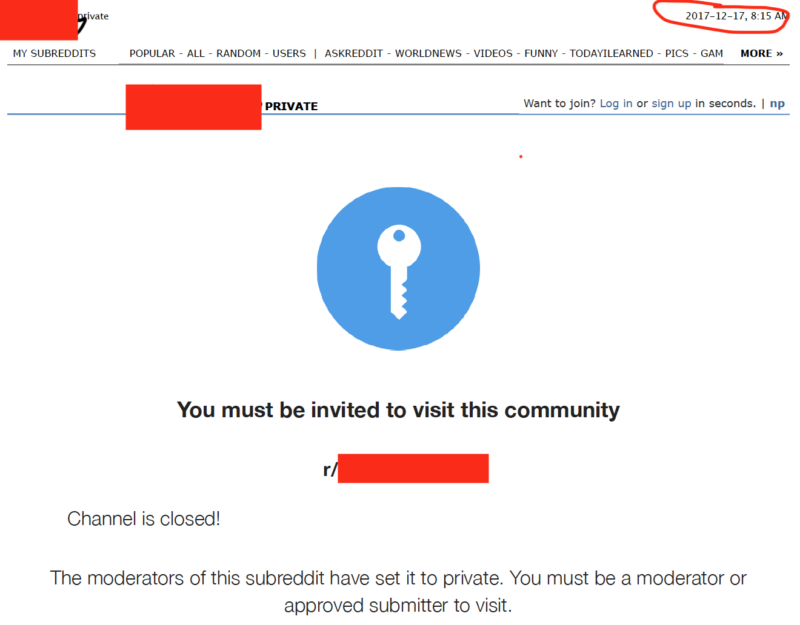
I was entertaining an ethnographic project at the time, and collected a few whitepapers. For a qualitative researcher, those whitepapers were a treasure trove of information. But, looking online, they’re largely scrubbed, gone, erased. In some cases, ICO’s founders’ LinkedIn profiles were scrubbed and online communities surrounding the projects disappeared, even as early as ICOs didn’t raise the millions they were hoping for.

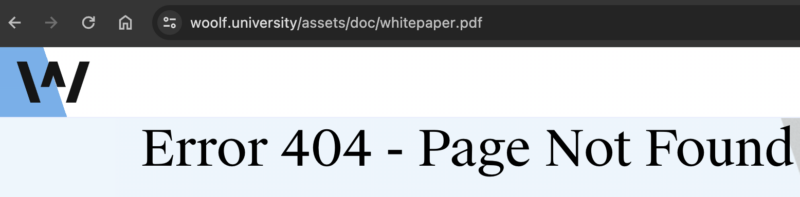
Some of you following this space might remember Woolf, the “world’s first blockchain university” launched by Oxford academics. And you might also remember that, like other edtech projects, it “pivoted.” See Martin Weller’s writing and David Gerard’s writing on this. Like so many others, the whitepaper describing the vision, the impending disruption of higher ed through a particular form of edtech, is gone. David kept a copy of that whitepaper, and I have copies of a couple of whitepapers from other ventures. But, by and large, that evidence is gone. I get it. Scammers scam, honest companies pivot, the two aren’t the same, and reputation management is a thing. But, I hope that this short post serves as a small reminder to someone in the future that grandiose claims around educational technology aren’t new. And perhaps, just perhaps, at a time of grandiose claims around AI in education, there are some lessons here.


Page 1 of 28

Powered by WordPress & Theme by Anders Norén